
How fast can you deliver during an emergency?
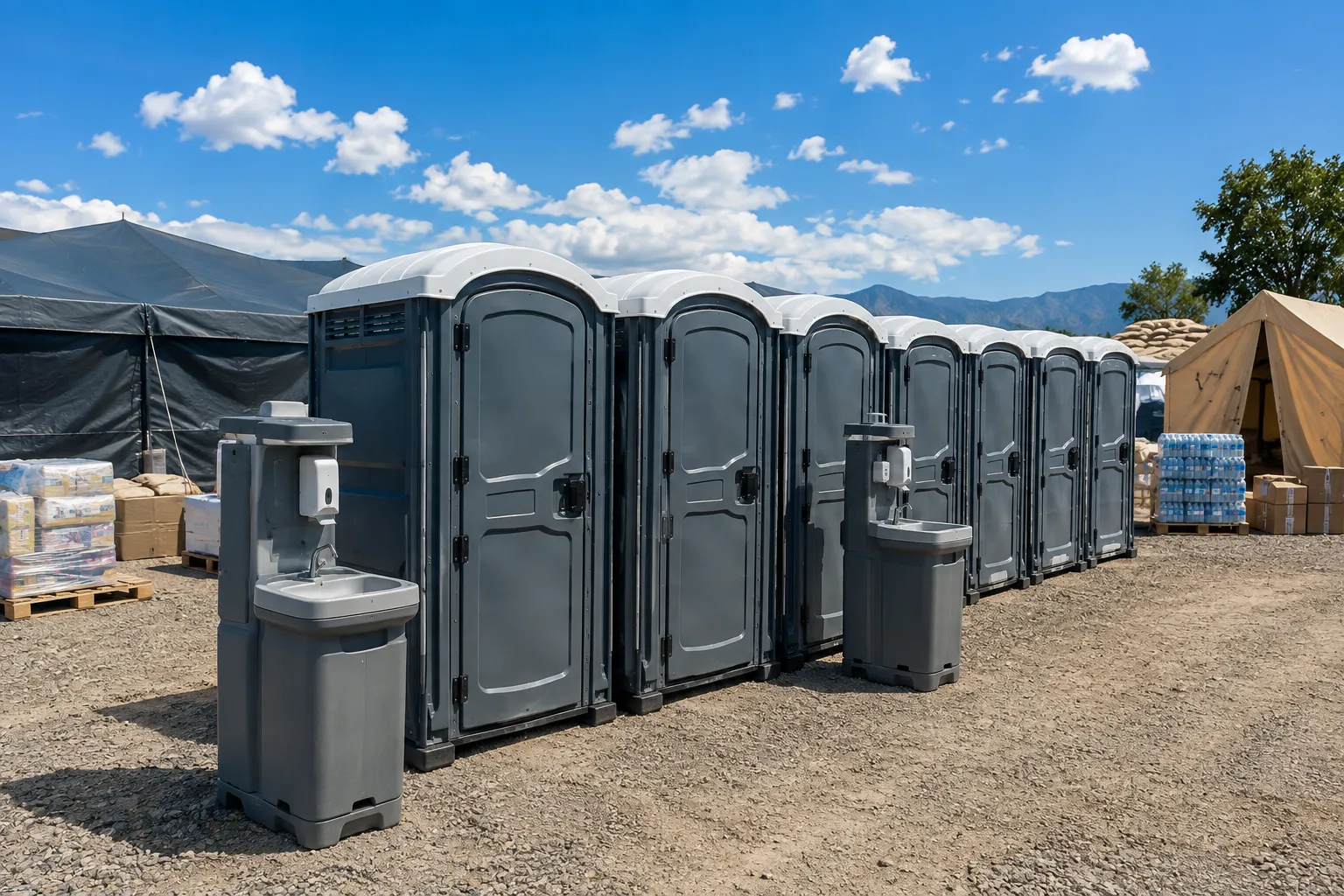
Speed is the whole point of emergency porta potty rental. We keep standard units staged and ready, because disaster response does not wait for a normal delivery window. Once we confirm site access and placement, trucks move. A rollout serving American Fork, 5.9 miles southeast, or Saratoga Springs, 8.1 miles southwest, runs on the same call sheet as a job inside Lehi.
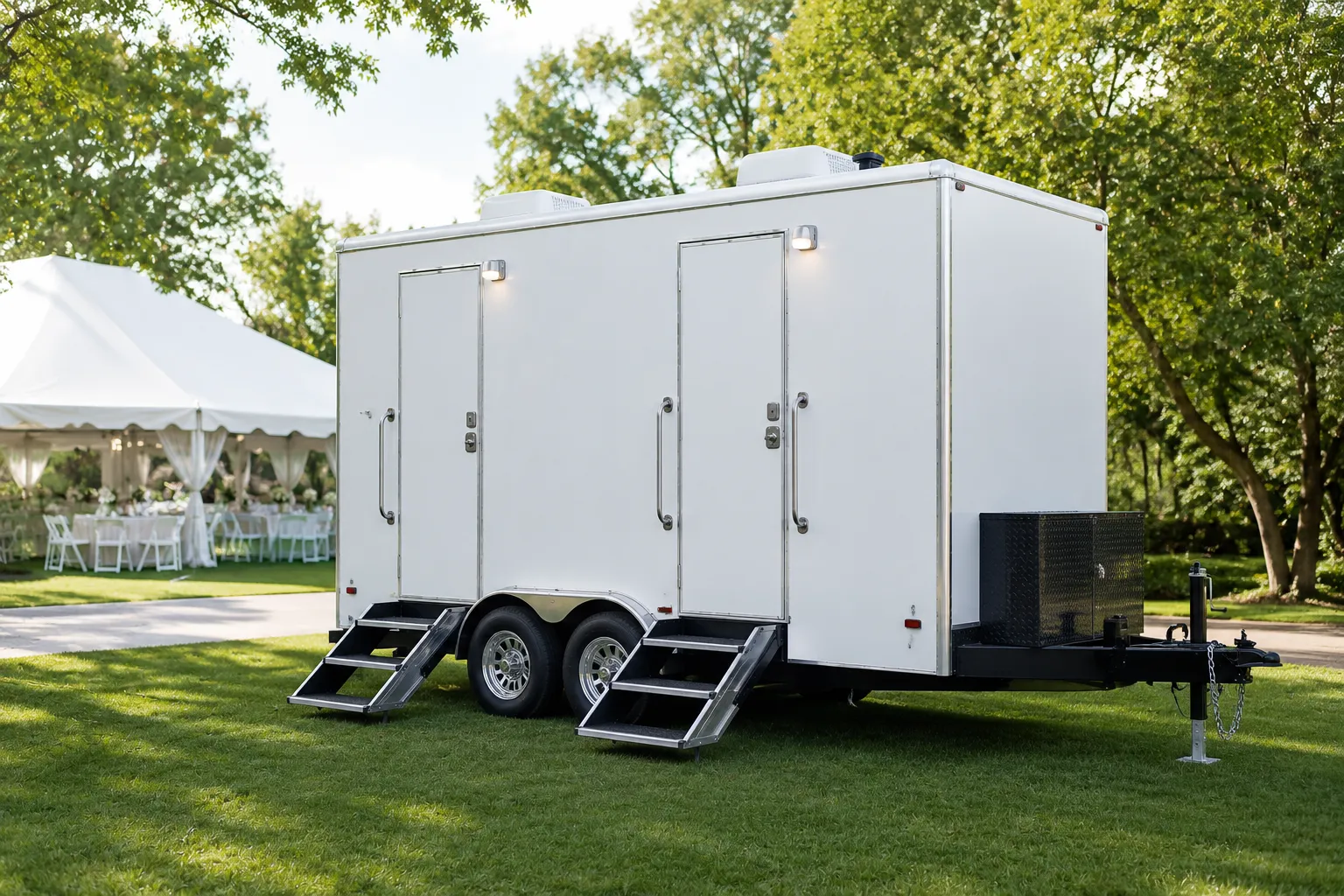
Access matters more than distance. If a roll-off or restroom trailer is part of the response, our drivers need roughly 60 feet of straight clearance behind the truck to place it safely. Tight cul-de-sacs and debris-choked streets slow that down, so tell us up front what the street looks like. For a shelter or command post that will run for days, a restroom trailer rental or a bank of standard porta potty rental units solves different problems: trailers handle staff and volunteers who want privacy and running water, standard units handle crowd volume fast.
Disaster response also means unpredictable headcount. That is where how many porta potties do i need becomes the real question, not an afterthought. We size the order to the shelter population, not a guess, and adjust as the response scales up or down over the following days.
What sanitation is required at a disaster shelter or relief site?
Shelters and relief sites still answer to the same baseline sanitation logic as any worksite: enough toilets, potable water, and a way to wash hands. OSHA 1926.51(c) sets construction ratios at one toilet for 20 workers or fewer, scaling up from there, and that framework is a reasonable planning floor for a relief site staffed with responders and volunteers even though it was written for job sites. OSHA 1926.51(a)(1) requires an adequate supply of potable water in any place of employment, which matters when a water main is the thing that broke in the first place.
Handwashing is not optional gear here. 29 CFR 1910.141(d)2) requires soap and towels or a hand-drying device at wash stations, since hand sanitizer alone does not satisfy that standard. A row of handwashing station rental units next to the toilets keeps that requirement covered without improvising. If the disaster involved contamination from chemicals, coatings, or pesticides, OSHA 1926.51(f)(1) also requires washing facilities for workers handling those materials, which comes up more often than people expect in flood and fire cleanup.
Accessibility does not get suspended during an emergency either. ADA Standards 213.2 requires at least 5 percent of a cluster of single-user toilets to be accessible, never fewer than one. An ada accessible porta potty unit needs a 60 inch turning circle per ADA 304.3.1 and a 32 inch clear door opening under ADA 404.2.3, so plan pad space accordingly on uneven ground.
| unit | duration | typical price |
|---|---|---|
| standard | day | $150 |
| standard | week | $200 |
| ada | day | $230 |
| trailer | day | $800 |
| delivery_fee | day | $150 |
Table prices reflect measured market rates and vary by scope. A porta potty rental cost page breaks down what drives the difference between a single-day emergency drop and a multi-week deployment.
Do you handle debris and cleanup alongside sanitation?
Yes, disaster response usually means debris removal running parallel to restrooms. A roll-off dumpster rental clears storm debris, damaged drywall, and flood-soaked belongings, and sizing depends on the damage: a 10 yard dumpster rental suits a single flooded basement, while a 30 yard dumpster rental or 40 yard dumpster rental fits a multi-home cleanup. Check what cannot go in a dumpster before loading, since hazardous materials from a disaster site often need separate disposal.
If the site needs to be secured while cleanup continues, a temporary fence rental keeps people out of unstable structures, and crowd control barrier rental manages foot traffic around a shelter entrance. Storage is often the missing piece: a storage container rental or mobile office trailer rental gives responders a dry place to stage supplies. For septic systems knocked offline by flooding, emergency septic service and holding tank rental keep wastewater managed until the system is repaired. Lehi sites near Draper, 8.4 miles north, or Riverton, 13.0 miles northwest, get the same response coordination.
What if the disaster site has no power?
We can pair sanitation with a light tower rental for nighttime work and a temporary power pole if the response runs past a few days. Power failures often accompany the sanitation problem, so we ask about site power during the first call. This lets us plan lighting and pump equipment together instead of scrambling later.
How long can emergency units stay on site?
As long as the response needs them. Many disaster deployments start as a short-term order and extend into weeks. A porta potty rental per day rate applies to the first days, and it shifts to monthly porta potty rental pricing once the deployment stabilizes into a longer recovery phase.
Can you service units already placed by another responder?
Yes, in most cases. We can take over servicing for units already on a disaster site, provided we can confirm the unit type and access for our trucks. Call ahead so we can match tank pumping and restocking to the existing schedule instead of interrupting it.
Do disaster relief units need to be ADA accessible?
At least one accessible unit is required in any cluster of portable toilets under ADA Standards 213.2. Shelters and relief sites should not be the exception. We stock accessible units with the wider door and turning space, and can prioritize their delivery when time is tight during a response.
What happens if the situation is still unsafe for delivery?
We will not send a truck into an unsafe site. Downed lines, unstable structures, or active flooding delay delivery until the area is cleared. Coordinate with local incident command first, then call us with a confirmed access window so placement happens without a wasted trip.
Next step
Get a delivery date
Tell us the address, the dates and the headcount. We size the order and confirm the route.