
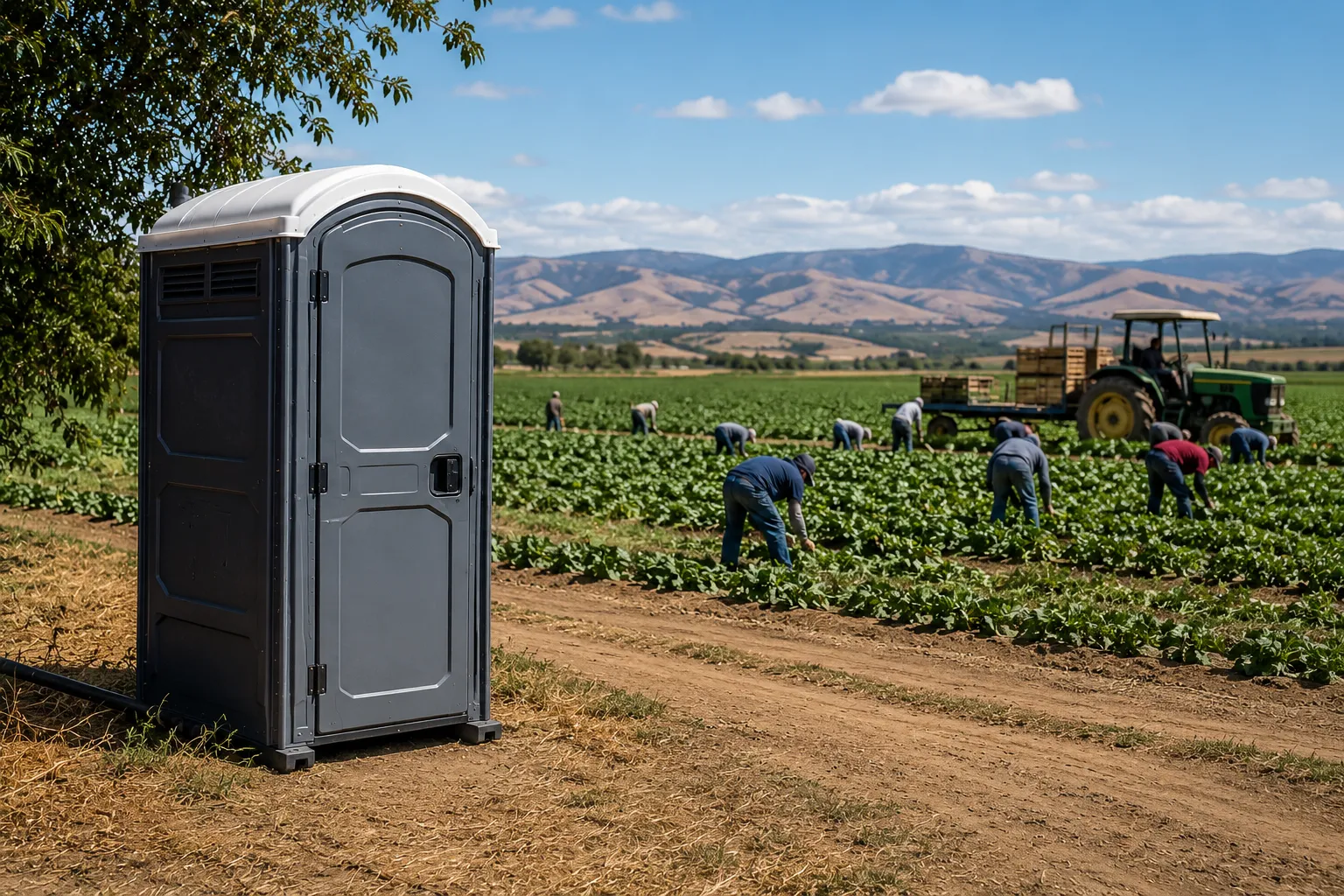
What does a farm crew actually need for sanitation?
Start with the basics: a toilet, water, and a way to wash hands. OSHA 1928.110 covers hand-labor operations in agriculture and calls for potable water, toilet facilities, and handwashing set up within a quarter mile of where people are working, at a ratio of one facility per 20 employees. That is a different rule than construction site services fall under, so do not mix them up if your operation runs both a field crew and a building project on the same property. For most farm setups in Lehi, a standard porta potty rental handles the toilet side, and a handwashing station rental or portable sink rental covers the water and soap requirement. Under 29 CFR 1910.141(d)(2), washing facilities need soap and towels or a hand-drying device. Hand sanitizer alone does not satisfy that standard, so pair any sanitizer station with real soap and water where you can. If your crew works with herbicides or insecticides, OSHA 1926.51(f)(1) requires washing facilities for that contaminant exposure specifically, not as a general rule. A lot of orchard and row-crop operations near Lehi keep a wash station right at the field edge for exactly that reason. Placement matters too: check porta potty placement guide for tips on keeping units accessible without blocking equipment paths or irrigation lines.
How many units does a farm operation need?
The count depends on crew size, not acreage. OSHA 1928.110 sets one facility per 20 hand-labor employees, and that facility has to sit within a quarter mile of the work area, which usually means moving units as harvest crews shift fields. A 12-person crew needs one unit; a 45-person crew needs three, spaced out so nobody walks farther than that quarter mile. Use how many porta potties do i need to work out totals for larger seasonal crews. Weekly service is the standard rhythm: ANSI/PSAI Z4.3 sets one service visit per week as the baseline interval for up to 10 users over a 40 hour week, which lines up well with a typical field crew schedule. If your farm sits close to a construction phase too, like a new barn or equipment shed, look at porta john rental options built for that kind of mixed use. Farms running longer seasonal contracts often do better with a monthly porta potty rental instead of booking week to week, since the standard unit's monthly rate holds steady across a full harvest season. Lehi sits close enough to American Fork, 5.9 miles southeast, and Saratoga Springs, 8.1 miles southwest, that crews splitting time across leased ground in both areas can usually get same-day delivery without a long drive.
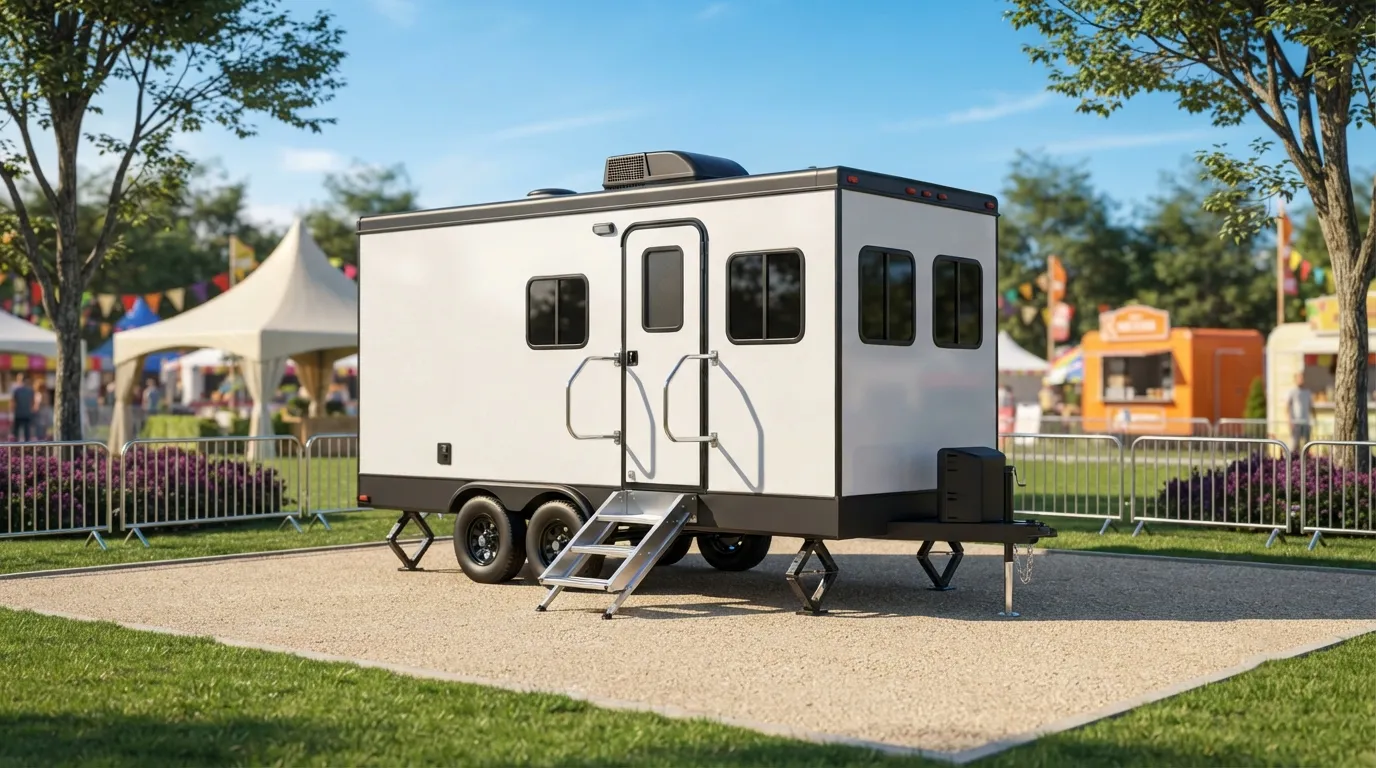
What does farm restroom rental cost?
| unit | duration | typical price |
|---|---|---|
| standard | day | $150 |
| standard | week | $200 |
| standard | month | $200 |
| delivery_fee | week | $100 |
| delivery_fee | month | $172 |
Most farm accounts land in the weekly or monthly column, since a single day rarely covers a real crew rotation. A standard unit at $200 a week or $200 a month gives you the flexibility to add units as harvest ramps up and drop them in the off season. Delivery runs separately, and a weekly delivery fee typically lands around $100. For full breakdowns by rental length, see porta potty rental cost or porta potty rental per day if you only need coverage for a short planting push. If your farm also runs a produce stand or agritourism event, event restroom rental or county fair restrooms pages cover that side separately. Farms handling livestock waste or dairy operations sometimes need septic pumping service or holding tank rental alongside toilets, and a residential-scale septic tank is typically pumped every 3 to 5 years depending on tank size and household or facility load. Lehi Porta Pros delivers across the valley, including runs out toward Draper, 8.4 miles north, and Riverton, 13.0 miles northwest, for operations that lease ground in more than one town.
How far in advance should I book for harvest season?
Book as early as you can once your labor schedule firms up. Harvest crews spike demand fast, and weekly service slots fill first. Lehi Porta Pros can often accommodate short notice, but locking in service two to three weeks ahead protects your spot during peak season.
Do I need a separate handwashing station if I already have a portable toilet?
Yes. A toilet unit alone does not meet the washing facility requirement under 29 CFR 1910.141(d)(2), which calls for soap and towels or a hand-drying device. Pair every toilet cluster with a dedicated handwashing station, especially if crews handle produce or work near chemical applications.
Can portable toilets be moved as our crew shifts fields?
Yes, and OSHA 1928.110 expects that. Facilities must stay within a quarter mile of the work area, so as crews move to a new field or block, the units should move too. Lehi Porta Pros can schedule relocations as part of a weekly service plan.
What size unit works best for a small family farm?
A standard unit works for most small operations. It has a 60 to 70 gallon holding tank and stands about 92 inches tall, footprint around 44 by 48 inches, small enough to place near a barn or equipment yard without blocking access.
Do farms need ADA-accessible units?
If your farm hosts public events, like a pumpkin patch or corn maze, ADA Standards 213.2 requires that at least 5 percent of clustered single-user units be accessible, with a minimum of one. Check ada accessible porta potty for specs.
Next step
Get a delivery date
Tell us the address, the dates and the headcount. We size the order and confirm the route.