How many portable toilets do I need?
The math depends on your crowd size and event length. OSHA 1926.51(c) sets minimums for construction: at 20 workers or fewer you need one facility, and you add one toilet seat and one urinal per 40 workers as you grow past that. For special events, assume one unit per 50 guests at a four-hour party, or one per 30 for an all-day festival. If your crew works around the clock, add units because people won't queue. Our porta potty rental checklist breaks down the math by job type. The best move is to overestimate by one or two: a spare unit sitting empty costs less than a backed-up crew losing the day.
What's the difference between standard and deluxe?
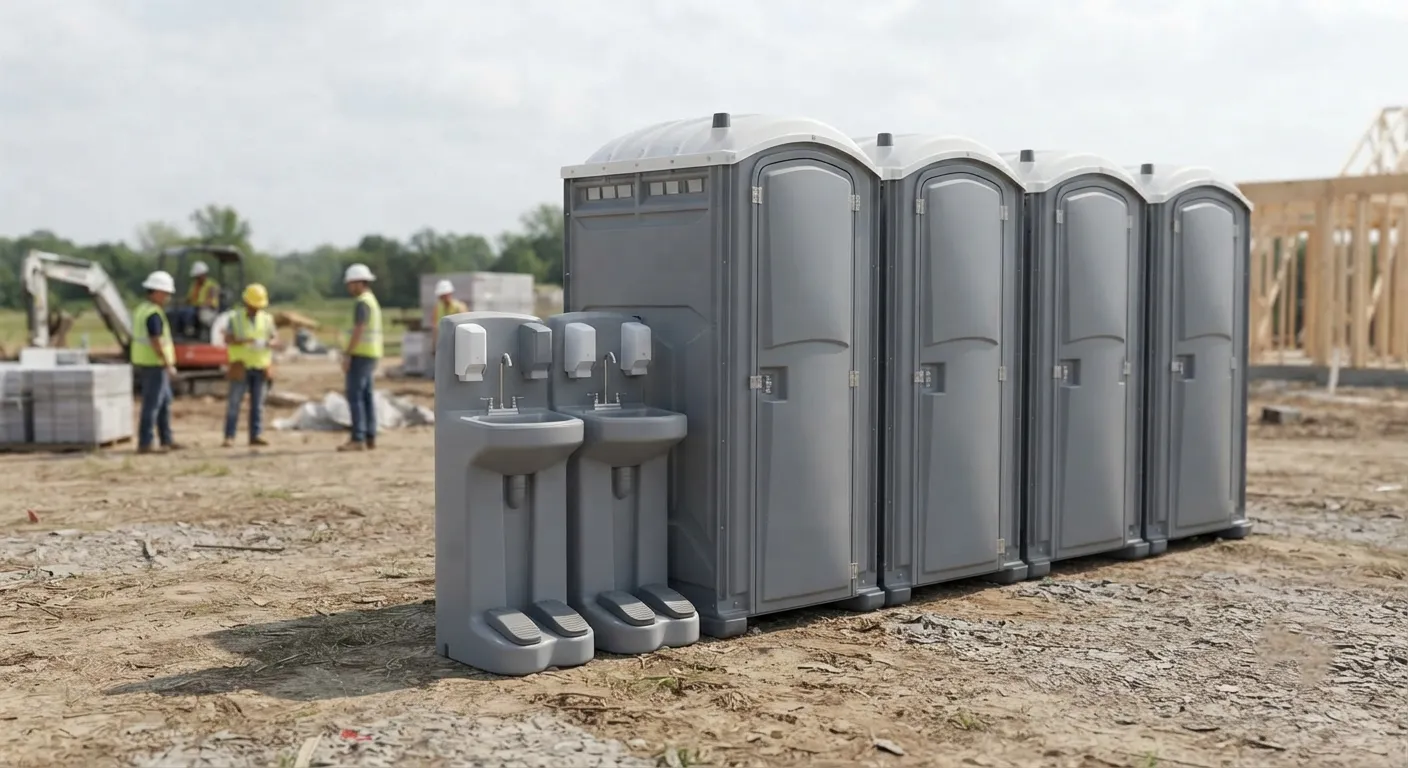
Standard units work. They're single-stall, unheated, and they hold waste in a 60 to 70 gallon tank that we pump weekly under the baseline service interval. Deluxe units have a flushing toilet bowl, hand soap, and a sink inside. They're taller and heavier, so delivery costs a bit more. For construction sites in Lehi, standard is the norm. For weddings and upscale events, deluxe keeps guests happier. Check our deluxe flushable porta potty page for the feel of one. If you need running water and a mirror, a restroom trailer rental might suit you better than a single portable unit.
Do I need an ADA-accessible toilet?
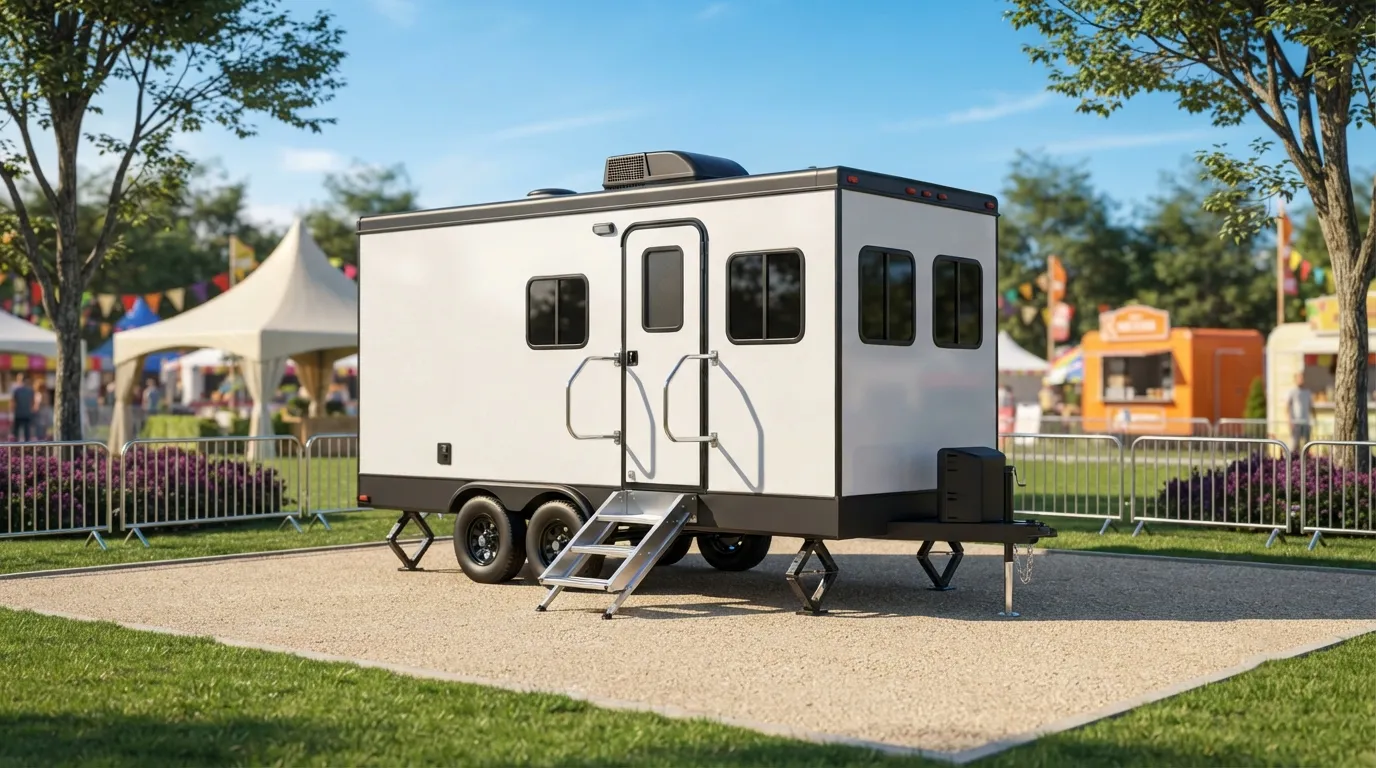
Yes, if you're serving the public or your crew includes disabled workers. ADA Standards section 213.2 requires at least 5 percent of clustered units to be accessible, and never fewer than one. An ADA accessible porta potty has a 36-inch clear entrance, a 60-inch turning circle inside, and grab bars. It's bigger and costs more than standard. It counts toward your total headcount, don't add it on top. If you're unsure whether you need one, call us. Lehi municipal rules may also apply; placement in public right of way needs confirming with the city.
How do I know when my septic tank needs pumping?
A residential septic tank is typically pumped every 3 to 5 years, driven by tank size and household size. Watch for slow drains, sewage smell around the tank, or wet spots in the yard. Don't wait for those signs. Our septic tank warning signs page lists the red flags. We offer septic pumping service in Lehi and nearby towns like American Fork, which is 5.9 miles southeast. If you have a grease trap in a restaurant or food prep area, we pump those when fats, oils, grease and solids reach 25 percent of the liquid depth. Grease trap pumping follows a tighter schedule than septic.
What can't go in a dumpster?
Hazardous waste, tires, electronics, batteries and paint can't go in a standard roll-off dumpster rental. Asbestos and PCBs are illegal. Wet or dripping materials damage the truck and other loads. Ask before you toss anything unusual. We'll tell you if it's blocked or point you to the right disposal stream. See our what cannot go in a dumpster guide for the full list. Weight limits also matter: know your material before you fill. Check dumpster weight limits to avoid overage fees.
Next step
Get a delivery date
Tell us the address, the dates and the headcount. We size the order and confirm the route.