
How many restrooms does a race route need?
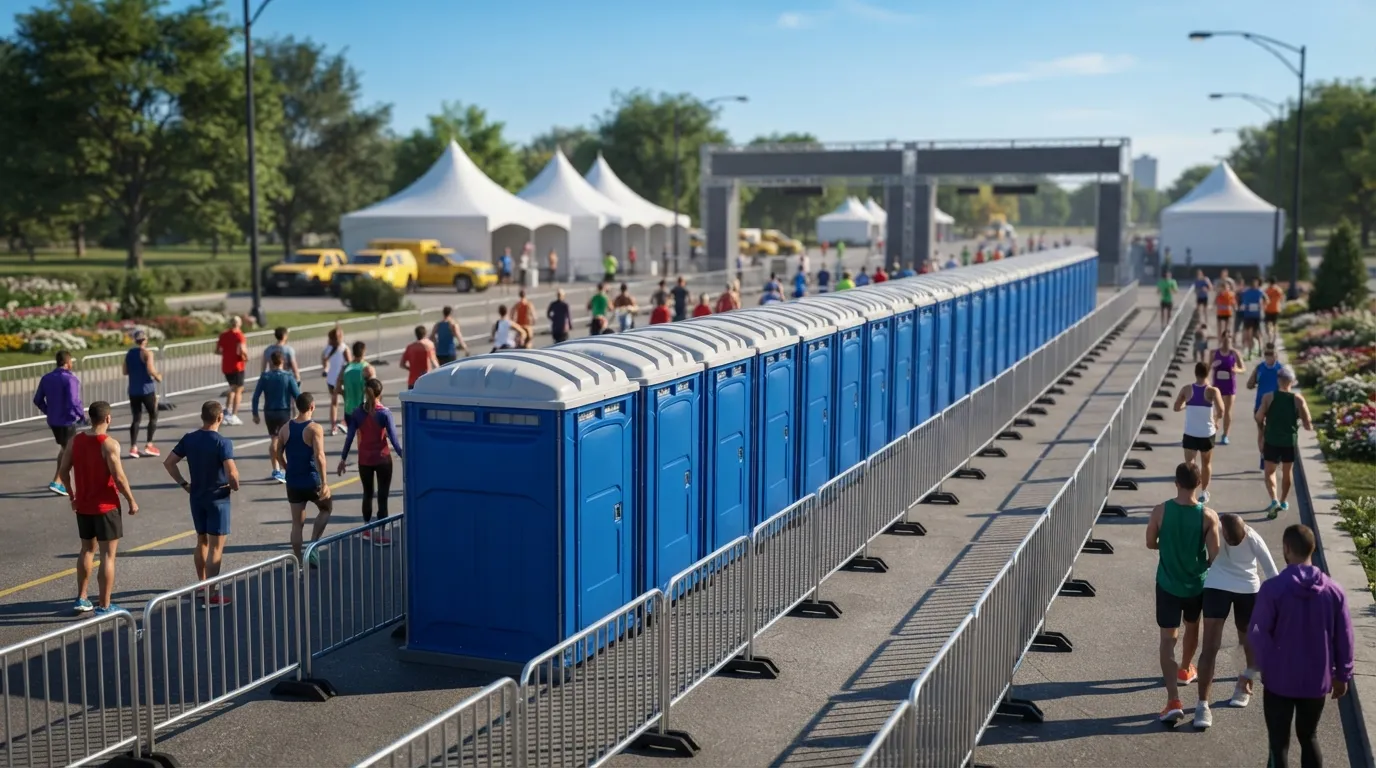
Course restrooms depend on runner count, aid station spacing and whether you have a full closure or a rolling one. A 5k with 300 runners needs far less than a marathon with 3,000, and OSHA 1926.51(c) sets construction-site ratios that many race organizers use as a baseline even though runners aren't workers: roughly 1 toilet per 20 people at small counts, scaling to 1 per 40 or 1 per 50 as headcount rises. For most Lehi races, that means clusters of standard porta potty rental units every mile or two, heavier at the start line where everyone gathers before the gun, and a dense bank at the finish where tired runners and family all converge at once. Aid stations near mile markers 3, 6 and 9 usually get one or two units each, not a full bank. If your event pulls a big spectator crowd, add event restroom rental capacity separate from the runner count, because spectators camp out for hours and runners move through in minutes. Races that also draw wheelchair and adaptive athletes need at least one ADA accessible porta potty rental per cluster, consistent with ADA Standards 213.2, which requires 5 percent of clustered single-user units to be accessible with a minimum of one. Course marshals near American Fork, 5.9 miles southeast of Lehi, often coordinate shared placement when a race route crosses city lines.
What about power and lighting at start and finish areas?
Timing tents, PA systems and finish-line arches all need power, and most race organizers rent a temporary power pole rather than run extension cords across a parking lot. Knowing how to brace a temporary power pole matters before it takes any load: set the base plate on stable, level ground per ADA Standards 302.1's stability standard for surfaces nearby, then guy-wire or stake the pole at two or three points so wind and foot traffic near a crowded finish line don't tip it. Crews also check that any GFCI protection meets OSHA 1926.404(b)(1)(ii) before timing equipment or sound gear gets plugged in, since a wet morning start on an October race day in Lehi is common. If your event runs before sunrise or past dusk, a light tower rental at the start corral and finish chute keeps volunteers and runners safe on uneven ground. Barricades along the course, especially at road crossings, should conform to ANSI D6.1 per OSHA 1926.202, and most timing companies expect the restroom vendor and the power vendor to coordinate placement so cords, tanks and cables don't cross the runner lane. Races near Draper, 8.4 miles north, sometimes borrow the same rental fleet on back-to-back weekends, so book early.
Where should restrooms go on race day?
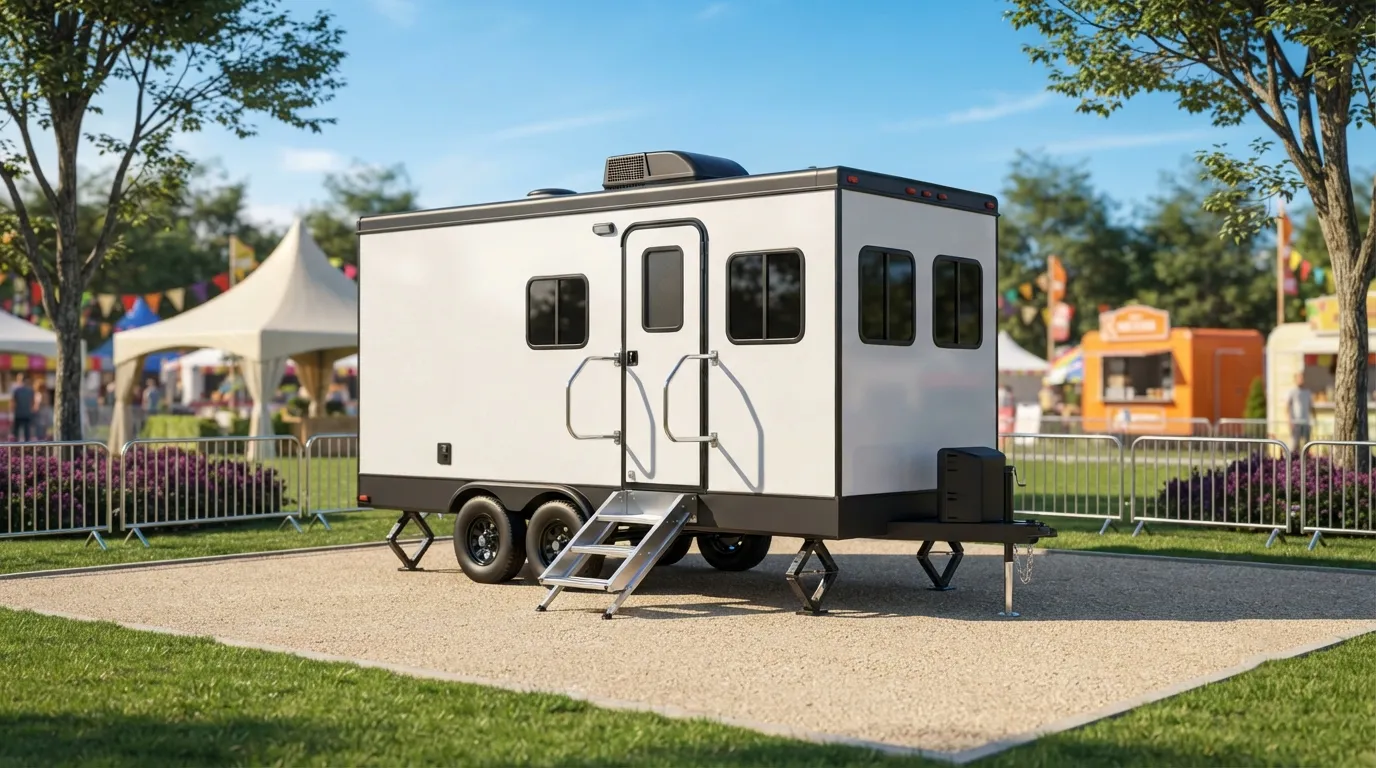
Restrooms belong at the start corral, the finish chute, and any aid station with a real gathering point, not scattered evenly down the whole course. A truck delivering standard porta potty rental units needs about 60 feet of straight clearance behind it to back in and place tanks level, so scout parking lots and shoulder space before race morning. Keep units off the actual running surface and at least a few feet back from any timing mat, since the electronics run tight loops of cable. For big events with VIP tents or sponsor villages, a deluxe flushable porta potty or even a restroom trailer rental at the finish line gives sponsors and elite runners a nicer option than the standard course units. Handwashing matters too: 29 CFR 1910.141(d)(2) requires soap and towels or a hand-drying device wherever washing facilities are provided, so pair your restroom order with a handwashing station rental at aid stations handling food or gels. Races that finish near Saratoga Springs, 8.1 miles southwest of Lehi, often share a single vendor delivery run to cut costs across both ends of the course.
How far in advance should I book race restrooms?
Book 3 to 4 weeks out for a mid-size race, sooner for anything over 1,000 runners. Weekend rates for standard units run in the $125 to $400 range depending on count and add-ons, and vendors juggle multiple Lehi-area events on the same Saturday, so early orders get first pick of trucks and delivery windows.
Do I need ADA units even for a small local race?
Yes, if you're clustering portable toilets at all. ADA Standards 213.2 requires at least one accessible unit per cluster, even for a 200-runner fun run. Skipping it isn't just a compliance gap, it turns away runners and family members who need that unit most.
How many units do I need for a 500-runner race?
Plan on roughly 10 to 15 standard units split between start, finish and one aid station, following the same scaling logic OSHA 1926.51(c) uses for worksites. Check our how many porta potties do I need guide for a fuller breakdown by headcount.
What does it cost to rent restrooms for a one-day race?
Standard units run $100 to $350 for a single event day, and weekend events (Friday setup through Sunday teardown) run $125 to $400 per unit. See porta potty rental per day for the full breakdown.
Can the same vendor handle restrooms, power and fencing for one event?
Yes. Lehi Porta Pros delivers restrooms, temporary power pole setups, temporary fence rental for course barriers and handwashing station rental units on one coordinated schedule, which simplifies delivery windows for race-day logistics.
Next step
Get a delivery date
Tell us the address, the dates and the headcount. We size the order and confirm the route.